Home / Sketchbook / Packing an outdoor watercolour kit
Stop 1: raw umber
What do you actually need to start watercolour sketching outdoors?
Less than the shop suggests. A beginner can paint a respectable hillside with six colours, one brush and a block of paper, all of it small enough for a coat pocket and a day bag.
The editors, 18 June 2026. About 5 minutes.
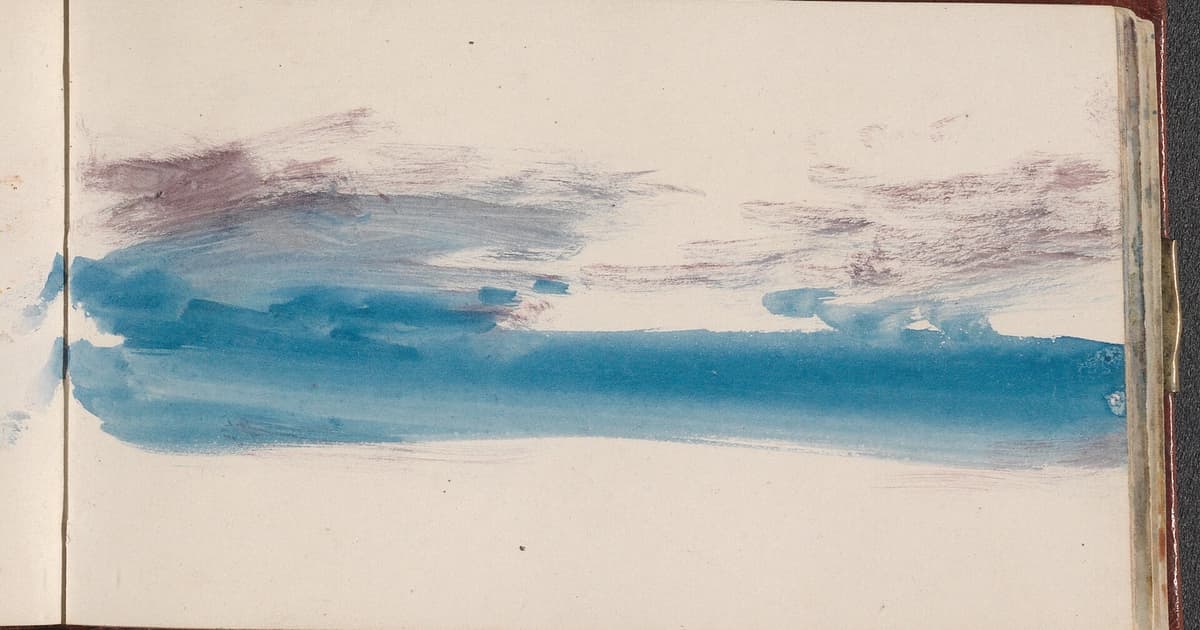
The answer first: a small box of pan paints, one round brush that holds a point, a block or sketchbook of 300 gsm watercolour paper, a soft pencil, a bottle of water with a pot to pour it into, and a rag. Add something dry to sit on. That is a complete kit, and it will fit in a day bag with room left for lunch.
Everything past that list is a choice, and most of those choices can wait until you have filled a sketchbook and know what annoys you. New painters tend to buy for the painter they hope to be in five years. The bag then gets heavy, and heavy bags stay on the hook by the door.
The list, with reasons
| Item | What to look for | Could you skip it? |
|---|---|---|
| Paint box | Pans in a lidded tin, with a mixing surface in the lid | No, though tubes and a folding palette do the same job |
| Round brush | Springs back to a point when wet; a mid size that can draw a twig and fill a sky | No |
| Paper | 300 gsm block or sketchbook, around A5 to A4 | No |
| Soft pencil and a sharpener | 2B or thereabouts; a putty rubber if you must | No. It is also the back-up plan when the rain starts |
| Water and pot | A screw-top bottle and any small lidded pot | Sometimes. A water brush holds its own supply |
| Rag or kitchen roll | Something to dry the brush and lift a mistake | No |
| Clips and a bag for rubbish | Two bulldog clips against the wind; a bag for everything you brought | The clips, on a still day |
| Sit mat or stool | Foam mat if you are walking far; folding stool if you are not | Only in June, on a dry wall |
Six colours is plenty
Bruce MacEvoy's long-running guide to a basic watercolour palette starts with a minimal set of three to six paints and only adds where mixing falls short. He calls a dozen "the magic number" for a generous box, which gives you a sense of how little the many-pan sets are really needed. For British landscape, where most of what you paint is some kind of grey-green or brown, a beginner's six might look like this:
The earths do a surprising share of the work. A yellow earth such as yellow ochre or raw sienna knocks back a sharp green, and burnt sienna with ultramarine gives you a whole family of cloud greys and dark shadows without a tube of black. There is more on that in our piece on mixing natural greens.
How to read the label in the shop
Paint names are marketing. Two tubes called "sap green" from different makers can contain different things. The honest information is the small code on the label, the Colour Index name, which Golden Artist Colors explains as a code giving the pigment's category, general hue and serial number. PB29 is a blue, PBr7 a brown, PY43 a yellow, and so on. A single code usually means simpler, cleaner mixing than a paint built from three or four pigments.
The same page sets out lightfastness under the ASTM D4303 test: a rating of I is excellent and II very good, with fading getting steadily worse from III down. This matters less than people think for a sketchbook that lives closed in a drawer, and more if you plan to frame something for a sunny wall.
Pans or tubes?
Watercolour is sold, as Tate's glossary notes, either as dry cakes or as liquid in tubes. For walking, pans win on one count: they are dry when you close the lid, so nothing leaks into your sandwiches. Tubes give you more paint quickly, which is why studio painters like them, but on a hillside you rarely need a big wash. A common compromise is to squeeze tube paint into empty pans at home and let it dry before you go.
One brush, chosen properly
Buy one round brush rather than a set of five. In the shop, or at home the moment it arrives, wet it and flick it: a good one comes back to a clean point without any help. Synthetic hair is fine, tough and much cheaper than sable. A folding travel brush protects the tip in a bag, and a water brush (a nylon tip on a hollow, squeezable barrel) removes the need for a pot, at the price of a slightly stiff, slightly mean stroke.
Paper is where to spend the money
If the budget only stretches to one good thing, make it the paper. Cheap brushes can still make a decent mark. Thin paper cockles and puddles, which makes every wash look like your fault. Our guide to paper weights and surfaces goes through the numbers, but the short version is 300 gsm, cold pressed, in a block or a sketchbook with a stiff back so you do not need a separate board.
What to leave at home
- The easel. You will spend your first twenty minutes fighting its legs. Hold the block on your knee.
- Masking fluid and salt. These are lovely tricks, and not for a windy day with one hour of light.
- Three sizes of paper. Decide on one size and leave the others to mock you from the shelf.
- Any idea of finishing. The aim is a page of looking, not a picture for the wall.
That last point has good company. The V&A's notes on a Turner watercolour of Tintern Abbey record that he rarely painted in watercolour directly from the subject, producing over 10,000 pencil sketches on his tours and remarking in 1819 that he could make "15 or 16 pencil sketches to one coloured". A trip that ends with a dozen pencil notes and one hurried wash is a perfectly respectable day out.
A sensible first outing
Pack the night before, and try the whole thing on the kitchen table first so you know where each item lives. Choose somewhere close with a bench, a clear view and a café or car nearby, since bad weather and low morale both arrive without warning. Give yourself an hour, and do a few small thumbnail sketches before you open the paints. Take home your rubbish and your dirty water; our note on where you can set up outdoors explains why it is worth being tidy.